PHB Biopolymer (Polyhydroxybutyrate)
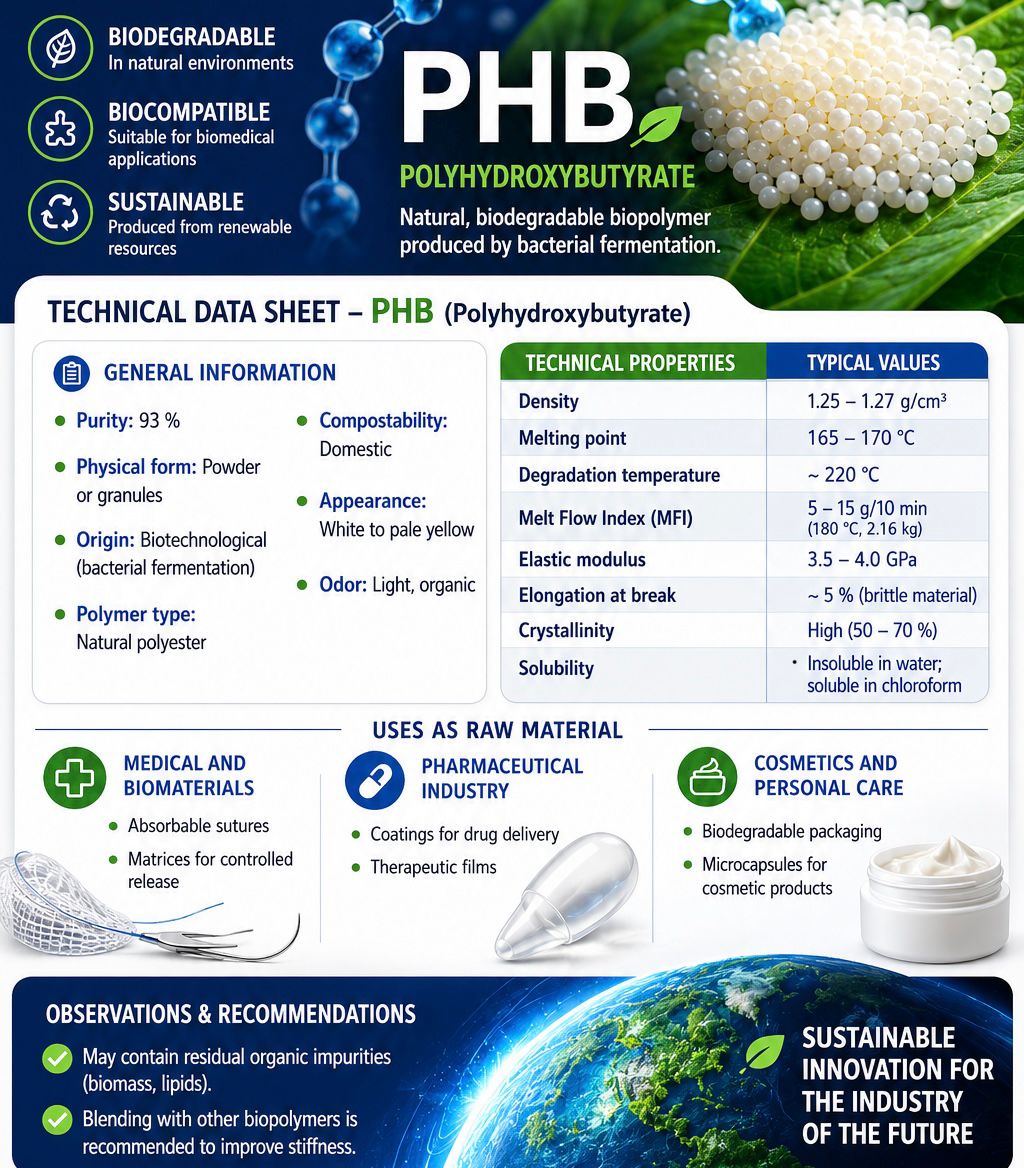
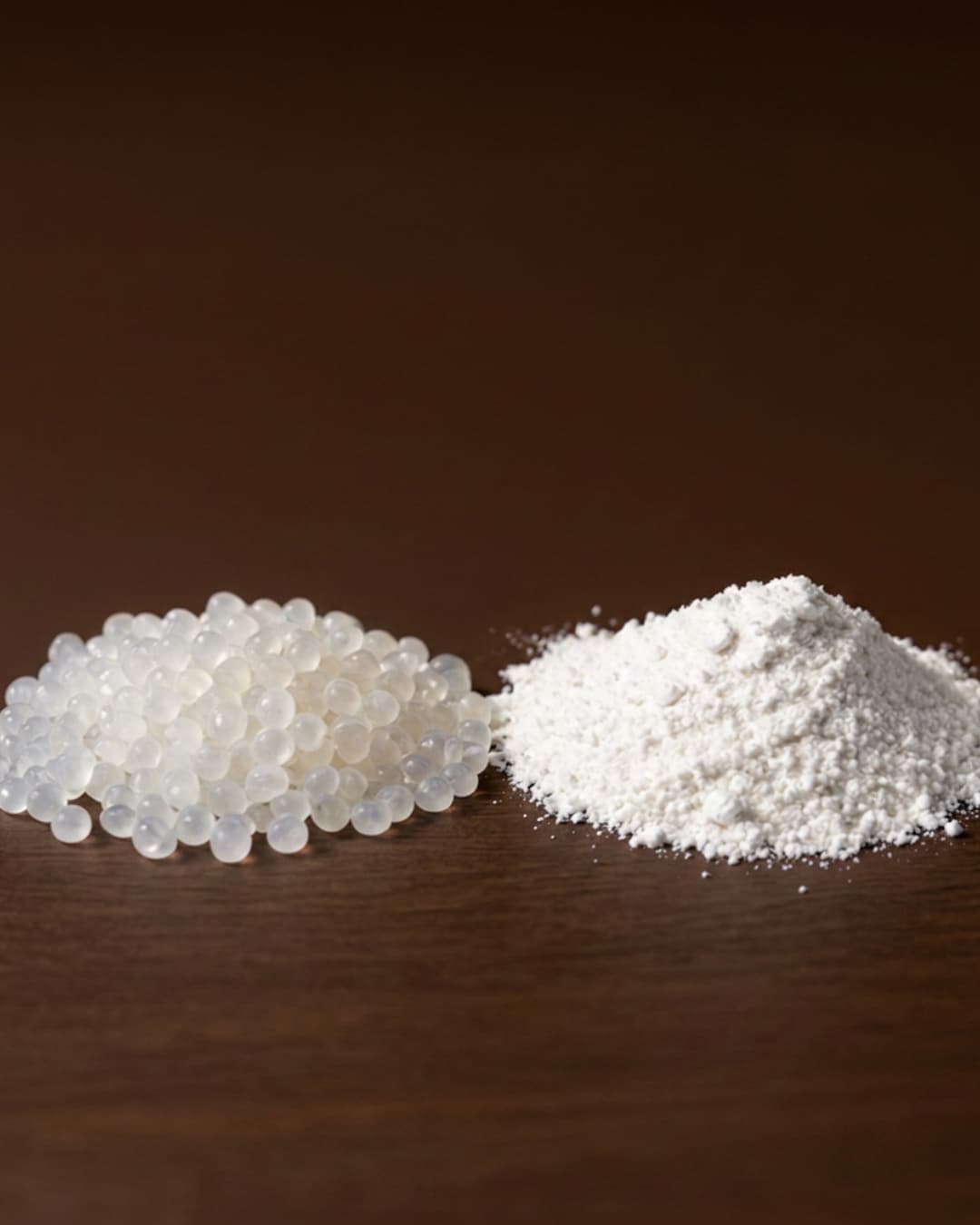
PHB (Polyhydroxybutyrate) is a natural and biodegradable biopolymer produced through bacterial fermentation from renewable resources. Characterized by its biocompatibility, domestic compostability and ability to degrade in natural environments, it is a sustainable alternative to conventional petroleum-based plastics. Purity 93%, physical form powder or granules, white to pale yellow appearance, light organic odor. Compatible with natural fiber reinforcement — ideal for compounding with abaca, pineapple and banana fibers to create high-performance bio-composite materials. Note: may contain residual organic impurities (biomass, lipids). Blending with other biopolymers is recommended to improve stiffness.
Origin
Argentina
Format
Powder / Granules
Available Grades
Technical Properties
- Purity: 93%
- Physical form: Powder or granules
- Origin: Biotechnological (bacterial fermentation)
- Polymer type: Natural polyester
- Compostability: Domestic
- Appearance: White to pale yellow
- Odor: Light, organic
- Density: 1.25 – 1.27 g/cm³
- Melting point: 165 – 170 °C
- Degradation temperature: ~ 220 °C
- Melt Flow Index (MFI): 5 – 15 g/10 min (180 °C, 2.16 kg)
- Elastic modulus: 3.5 – 4.0 GPa
- Elongation at break: ~ 5% (brittle material)
- Crystallinity: High (50 – 70%)
- Solubility: Insoluble in water; soluble in chloroform
Industrial Applications
- Medical and biomaterials: absorbable sutures, matrices for controlled release
- Pharmaceutical industry: coatings for drug delivery, therapeutic films
- Cosmetics and personal care: biodegradable packaging, microcapsules
- Natural fiber composites
- Agricultural films
- Automotive and consumer goods
Latin America's First PHB Biopolymer Plant
We are proud to announce the launch of Latin America's first PHB biopolymer production plant — and one of the first companies in the world to produce biodegradable biopolymer from soybean oil. This is more than a new industry: it is science, biotechnology, innovation and Argentine talent transforming our natural resources into high-value solutions for the world. For decades, Argentina exported soybeans and oil. Today we take a new step: transforming those same resources into high-technology sustainable materials with global reach.
Value Chain
- 1Argentine soybean grain
- 2Soybean oil
- 3Biotechnological fermentation
- 4Biodegradable biopolymers
- 5Export of technology and added value
More Biotechnology Means
- More value for our soybeans
- More value for Argentine oil
- More knowledge-based industry
- More high-value-added exports
- More national scientific and industrial development